
What founders get wrong about selling their technology company
Most founders think about selling their company too late and prepare for it too little. After advising on dozens of transactions in the $5–100M revenue range, we’ve seen the same mistakes repeat — and almost all of them are avoidable.
Timing the market versus timing the business
The most common mistake is conflating market conditions with business readiness. Founders watch M&A headlines and decide to sell when “the market is hot.” But strategic buyers and PE firms don’t pay premiums for market timing — they pay for clean financials, recurring revenue, and a management team that can operate without the founder.
The right question isn’t when is the market ready? It’s when is the business ready? A company with 80% recurring revenue, clean GAAP financials, and a second layer of management will command a strong multiple in any market. The inverse is rarely true.
The buyer universe is smaller than you think
For a $10–40M revenue technology services company, the realistic buyer universe is typically 8–15 credible parties — not hundreds. This means process design matters enormously. Running a wide, unfocused outreach to 60 names signals desperation and invites low offers. A tight, well-qualified process run in parallel creates the competitive tension that drives valuation.
The other implication: relationships matter more than process at this size. The buyer who ultimately pays the best price is usually one who already knows the company, the founder, or the sector. Warm introductions through an advisor with existing relationships consistently outperform cold outreach.
Cross-border transactions unlock a different multiple
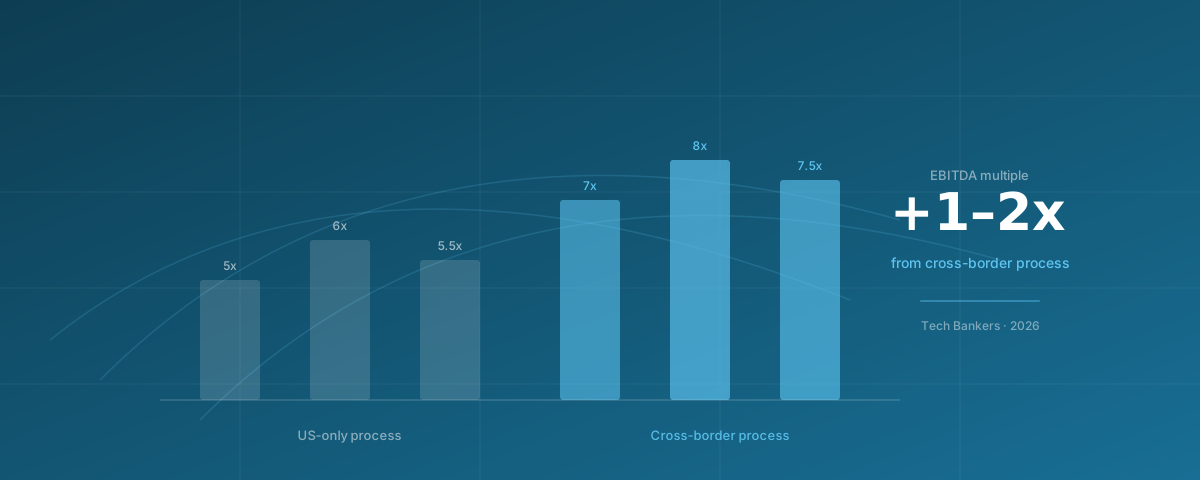
US-India technology services companies in the $5–100M range consistently see higher multiples from Indian acquirers — both strategic and PE — than from US-only processes. The arbitrage is real and structural: Indian buyers value the US revenue base at a premium they cannot build organically. An Indian IT services company acquiring a US-headquartered peer gets immediate access to Fortune 500 relationships, onshore delivery capability, and a dollar-denominated revenue base.
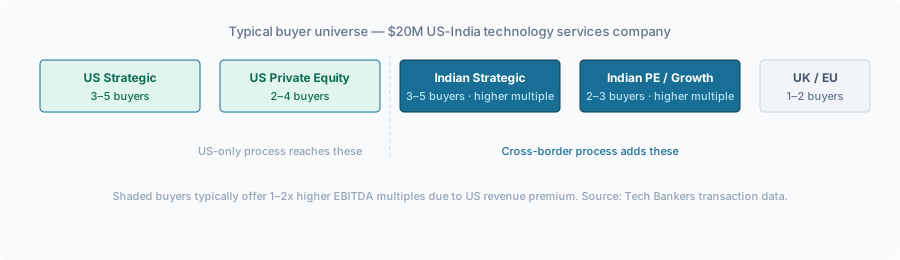
For the right company, running a parallel US-India process typically adds 1–2 turns of EBITDA multiple to the outcome. That’s meaningful at any size.
Founder dependency is the single biggest valuation discount
Every acquirer — strategic or financial — will assess how dependent the business is on the founder. If the answer is “very,” that’s a risk discount that directly reduces the multiple. We’ve seen deals where a $15M EBITDA business that should trade at 7–8x was bid at 5x because the founder was the primary client relationship for 70% of revenue.
The fix takes 18–24 months: deliberately introduce senior team members to key accounts, build documented processes, and let the team carry relationships independently. Starting this work two years before a planned exit is not early — it’s exactly right.
What good preparation looks like
The founders who get the best outcomes typically share four characteristics:
- They start 18–24 months early. Not to run a process — to prepare the business. Clean up the cap table, resolve any IP ownership questions, get to audited or audit-ready financials.
- They pick an advisor with the right buyer network. At this size, the advisor’s existing relationships with likely buyers are worth more than their process sophistication.
- They run a competitive process. Even if they have a preferred buyer, having two or three credible alternatives changes the negotiating dynamic entirely.
- They separate personal goals from transaction goals. The founder who needs liquidity to diversify has different priorities than the one who wants to stay and run a larger combined entity. Clarity on this shapes everything from deal structure to buyer selection.
If you’re considering a sale in the next 12–24 months, we’re happy to give you a candid read on timing, valuation range, and likely buyer fit. No retainer, no commitment — just a straight conversation.
Considering a sale in the next 12–24 months?
We're happy to give you a candid read on timing, valuation range, and buyer fit — no retainer, no commitment.
Get in touch